
AOD-9604 and Lipolysis: How It May Influence Lipolysis and Fat Breakdown
Imagine opening your kitchen pantry and seeing plenty of food inside.
You do not eat it all in one go. You take what you need and save the rest for later.
Your body works in much the same way. It stores extra energy in fat cells. When your body needs fuel, it can use some of that stored energy.
This is where AOD-9604 and lipolysis come into the picture.
AOD-9604 is a synthetic peptide made from a small part of growth hormone. It has attracted attention because of its possible effects on fat metabolism.
But how might it affect lipolysis?
The answer is not simple. Scientists still do not fully understand exactly how AOD-9604 works.
So, let’s look more closely at what is currently known about the AOD-9604 mechanism of action and its possible connection to lipolysis and fat breakdown.
What Is AOD-9604?
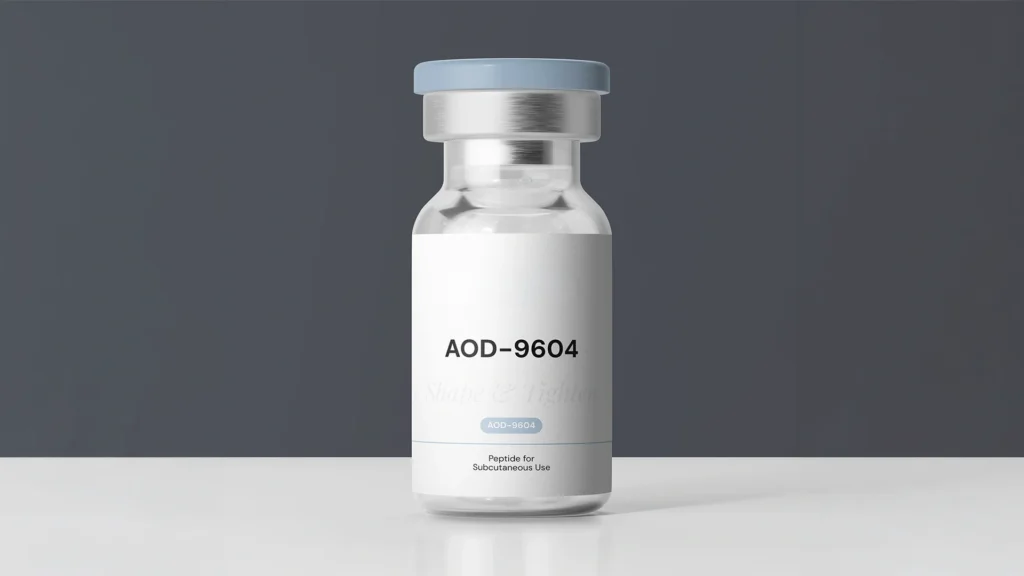
AOD-9604 is a synthetic peptide made up of 16 amino acids.
It is derived from the 176-191 region of human growth hormone. That part is connected to how the body breaks down fat.
AOD-9604 has gotten attention because of its effects on fat metabolism and breaking down fat.
Aod-9604 is not the same as full-length growth hormone. It only has a part of the whole hormone.
This difference can change how it acts inside the body.
Scientists have studied how AOD-9604 might work with cells and stored fat. The exact way it works is still not clear.
More studies are needed to learn more about how AOD-9604 functions.
What Is Lipolysis and How Does Fat Breakdown Work?
Your body keeps energy in fat cells. When it needs fuel, it can take some of that stored fat and use it for energy.
This action is called lipolysis. It is the body’s way of breaking down stored fat.
Most of the fat in your body is kept as triglycerides.
During lipolysis special substances break triglycerides into fatty acids and glycerol. The fatty acids can then go out of the cells and get into your blood.
Your body can use these fatty acids as a type of energy. Hormones also play a role in controlling lipolysis. They give messages that can either speed up or slow down breakdown based on what your body needs.
How May AOD-9604 Influence Lipolysis in Adipose Tissue?
AOD-9604 has been looked into for its effects on fat tissue.
Fat tissue is also called adipose tissue. It stores energy in the form of fat.
Some of the results show that AOD-9604 might change how fat cells handle stored energy. It might change how the body stores fat or uses it for energy.
The exact way it works is still not clear.
It is also not known if AOD-9604 directly starts lipolysis. Instead, it might change messages that are part of fat metabolism.
At this time AOD-9604 is best seen as a peptide that is being studied for its effects on fat metabolism. How it works on fat cells is still being looked into.
AOD-9604 and the β3-Adrenergic Pathway

β3-adrenergic receptors are present on fat cells.
They are part of a system that helps fat cells respond to signals in the body.
When these receptors are turned on, they can affect how fat cells use stored energy. They can also influence processes linked to fat breakdown.
β3-adrenergic receptors are also found in brown and beige fat. These types of fat can use energy and release some of that energy as heat.
Because of this, researchers have looked at the β3-adrenergic pathway to explore how AOD-9604 may affect fat tissue.
Still, this does not mean that AOD-9604 directly activates these receptors.
What Did Research Find About β3-Adrenergic Receptors?

Some findings showed changes in β3-adrenergic receptors in fat tissue.
→ β3-AR RNA increased: β3-AR gene activity increased in fat tissue.
→ Lipolytic sensitivity increased: Fat tissue became more responsive to signals linked to fat breakdown.
→ β3-adrenergic signaling: These findings suggest that this pathway may be involved in how AOD-9604 affects fat tissue.
However, this pathway may not explain everything that was observed.
AOD-9604 should not be described as a direct β3-adrenergic receptor activator. Its exact connection with this pathway is still not fully understood.
Does AOD-9604 Directly Activate β3-Adrenergic Receptors?

There is no clear evidence that AOD-9604 directly activates β3-adrenergic receptors.
A peptide can influence a signaling pathway without directly switching on its receptor.
Based on the available evidence, AOD-9604 should not be described as a proven β3-adrenergic receptor activator.
A more accurate way to explain it is that AOD-9604 may influence processes linked to β3-adrenergic signaling. However, the exact connection between the peptide and this pathway is still not fully understood.
How Does the cAMP-PKA Pathway Regulate Lipolysis?
The cAMP-PKA pathway is one part of the body’s natural process for breaking down stored fat.
It starts when a signal reaches a fat cell and increases cAMP levels inside the cell.
This increase can activate PKA.
PKA can then act on proteins that help control lipolysis.
As this process continues, fatty acids can be released from stored fat and made available for energy.
Although the cAMP-PKA pathway helps control normal lipolysis, it is not clear whether AOD-9604 directly activates this pathway in the body.
What About HSL, ATGL, and MGL?
ATGL, HSL, and MGL are key enzymes in normal lipolysis.
They help break stored fat down in steps.
| Enzyme | Main action |
| ATGL | Initiates triglyceride breakdown, producing diacylglycerol and fatty acids |
| HSL | Acts on diacylglycerol to produce monoacylglycerol and fatty acids |
| MGL | Completes the final step by converting monoacylglycerol into glycerol and a fatty acid |
Together, these enzymes break down stored triglycerides into fatty acids and glycerol. The body can then use the fatty acids for energy.
These enzymes are a normal part of the body’s fat breakdown process. However, it has not been clearly shown that AOD-9604 directly activates ATGL, HSL, or MGL.
This is why these enzymes are useful for understanding how lipolysis works. But they are not confirmed direct targets of AOD-9604.
AOD-9604 Mechanism of Action: Lipolysis and Lipogenesis
Lipolysis and lipogenesis work in opposite ways.
Lipolysis breaks down stored fat.
Lipogenesis helps the body make and store fat.
AOD-9604 has been studied for its possible effects on both processes. However, the current evidence does not clearly show that it directly increases lipolysis or prevents lipogenesis.
For this reason, it may be too strong to describe AOD-9604 as a proven fat-burning or fat-blocking treatment.
A more accurate way to describe it is as a peptide that is being studied for its possible effects on fat metabolism.
Does AOD-9604 Stimulate Lipolysis?

There is no clear answer yet.
Lipolysis is the process that breaks stored triglycerides into fatty acids and glycerol. This happens inside fat cells when the body needs energy.
AOD-9604 has been studied for possible effects on this process. But there is no clear proof that it directly turns on lipolysis through one specific pathway.
A substance can affect fat metabolism without directly activating the enzymes that break down stored fat.
So, it is more accurate to say that AOD-9604 may affect processes involved in fat breakdown. It should not be described as a proven direct activator of lipolysis.
Does AOD-9604 Inhibit Lipogenesis?

Lipogenesis is the process your body uses to make and store fat.
AOD-9604 has also been looked at for its possible effects on this process. However, there is not enough clear evidence to say that it directly stops lipogenesis.
So, it should not be described as a proven fat-storage blocker.
Its possible effect on the balance between fat breakdown and fat storage is still being explored.
Does AOD-9604 Cause Targeted Lipolysis?

No.
AOD-9604 does not target fat loss in one specific area of the body.
Your body determines where stored fat is used. You cannot choose to lose fat only from your stomach, arms, thighs, or another specific area with a treatment that works throughout the body.
Even if AOD-9604 affects fat metabolism, that does not mean it can cause spot fat loss.
Fat loss can also differ from one person to another.
AOD-9604 vs Full-Length HGH: What is the difference?

AOD-9604 and full-length HGH are related, but they are not the same thing.
AOD-9604 comes from a small section of growth hormone. Full-length HGH is the complete growth hormone made by the body.
Full-length HGH is the complete hormone.
| Feature | AOD-9604 | Full-length HGH |
| Structure | Short peptide | Complete growth hormone |
| Size | 16 amino acids | 191 amino acids |
| Origin | Derived from the 176-191 region of HGH | Full growth hormone |
| Main interest | Fat metabolism | Growth and metabolic functions |
| Hormone activity | Does not have the complete activity of HGH | Has the full activity of the hormone |
The term HGH lipolysis refers to the effects of full-length growth hormone that may relate to fat breakdown.
AOD-9604 is different.
It is a smaller peptide based on one part of the growth hormone structure. It does not have the full range of actions linked to the complete hormone.
This is why AOD-9604 should not be treated as the same thing as HGH.
Does AOD-9604 Increase IGF-1-Like Growth Hormone?

No clear evidence shows that AOD-9604 increases IGF-1 in the same way as full-length growth hormone.
AOD-9604 is made from a small section of the growth hormone structure. Full-length growth hormone is the complete hormone and can affect IGF-1 levels in the body.
So far, AOD-9604 has not been shown to produce the same IGF-1 response.
Its main area of interest is fat metabolism. It should not be expected to have the same effects as full-length growth hormone.
AOD-9604 is also not a replacement for growth hormone.
More information is needed to understand its full effects on the body.
What Does Research Show About AOD-9604 and Fat Loss?
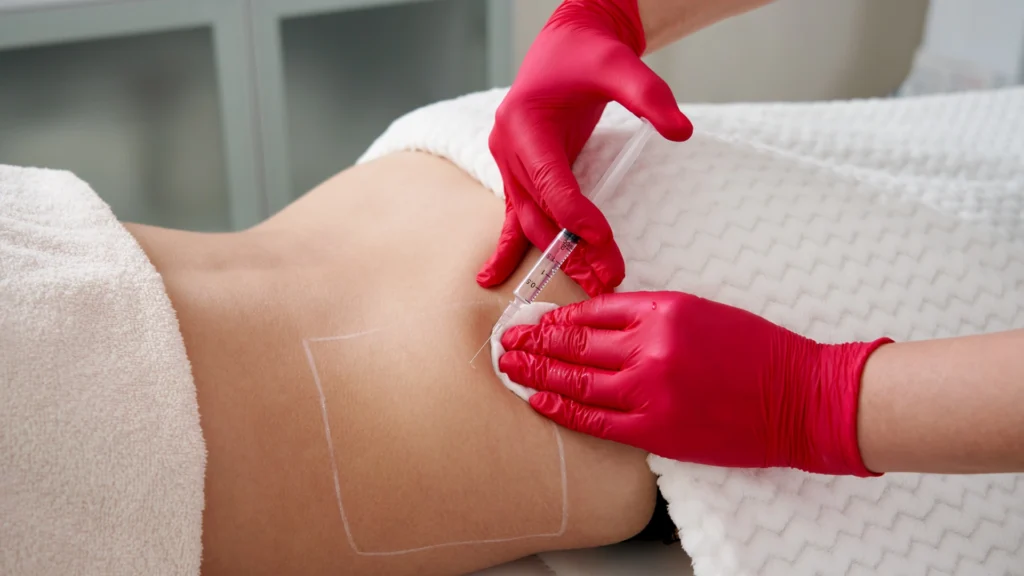
Studies have looked at how AOD-9604 may affect fat metabolism and body fat.
Some early work has shown changes in fat-related processes. This has increased interest in the peptide and its possible effects on fat loss.
However, the results do not clearly show a consistent fat-loss effect in people.
Findings from fat cells or other early testing do not always produce the same results.
Because of this, AOD-9604 cannot yet be called a proven fat-loss treatment.
More research is needed to understand whether it can lead to meaningful changes in body fat. It is also important to understand how much fat loss it could produce and how consistent the results may be.
Curious About Non-Surgical Fat Reduction? Let’s Explore the Options
AOD-9604 has drawn interest for its possible link to fat breakdown. But evidence does not yet show strong or steady fat loss.
The exact mechanism behind AOD-9604 and its possible effects on lipolysis is still being explored. Results may differ from person to person. More data may help us better understand how it works.

If you are looking for other ways to shape your body, The Beauty Lounge Toronto can help you explore your options. Their team can talk with you about non-surgical treatments based on your needs.
Book a consultation today. Talk about your concerns. Ask your questions. Then explore the options that may suit you.
FAQs
There is no timeline for how quickly AOD-9604 may affect fat metabolism. Everyone is different when it comes to AOD-9604. Some people may notice changes sooner, while others may not notice any changes at all. The exact timing is still unclear. We need information to understand how long it may take for AOD-9604 to affect the way the body processes and uses fat.
There is not enough evidence to conclude that AOD-9604 meaningfully increases metabolic rate or overall energy expenditure. While the peptide has been studied for its possible effects on fat metabolism, this does not mean it acts as a metabolism booster. More research is needed to understand whether AOD-9604 has any meaningful effect on how the body uses energy.
AOD-9604 is made from a part of a growth hormone. Other peptides have structures and may work in different ways. Their effects and safety profiles can also vary. At this point we do not have direct evidence to say whether AOD-9604 works better or worse than other peptides studied for fat loss. More research is needed to understand how AOD-9604 compares to peptides.
Several factors may affect how the body responds to AOD-9604. What you eat, how much you exercise, your body size and your overall health can all make a difference. The amount of AOD-9604 used and how long it is used may also affect the outcome. Since every person is different the response to AOD-9604 may not be the same for everyone. AOD-9604 can affect metabolism in different ways, for different people.