
Which Enzyme Breaks Triglycerides into Fatty Acids in Lipolysis
What happens to stored body fat when you skip a meal or finish a tough workout?
Your body is always producing energy, but when demand rises or food intake drops, it quickly shifts to stored fat as fuel.
This shift activates a tightly controlled process called enzymatic lipolysis, where specialized lipolysis enzymes begin breaking triglycerides into smaller molecules. These fatty acids are transported to energy-demanding tissues, where they undergo beta-oxidation to generate ATP.
This process is not random but follows a precise biological sequence inside fat cells.
That leads to an important question:
Which enzyme breaks down triglycerides into fatty acids during lipolysis, and why does the body need more than one enzyme instead of a single one?
The answer shows how carefully the body manages energy at a molecular level and how stored fat is gradually converted into usable fuel through a coordinated enzymatic system.
In this guide, you’ll explore which enzyme breaks down triglycerides into fatty acids during lipolysis, how lipolysis enzymes work together, and why each step is important for fat breakdown.
What Is Lipolysis?
Lipolysis is the natural metabolic process that breaks down stored triglycerides inside fat cells. These triglycerides act as the body’s long-term energy reserve. Whenever your body needs extra fuel, it begins converting these fat stores into smaller molecules that can travel through the bloodstream and supply energy to different tissues.
Unlike fat digestion, which occurs in the digestive system after eating, lipolysis takes place inside adipose (fat) tissue. It is carefully regulated by hormones and depends on several lipolysis enzymes that work one after another.
Lipolysis produces two final products:
- Free fatty acids
- Glycerol
Free fatty acids travel to muscles, the heart, and other organs where they are used to produce energy. Meanwhile, glycerol is transported to the liver, where it can help make glucose or support other metabolic functions.
Why Does Lipolysis Require Enzymes for Fat Breakdown?
Stored triglycerides are stable and cannot break down on their own. They need special enzymes to start the fat breakdown process. This process is called enzymatic lipolysis.
Enzymes are proteins that speed up chemical reactions. During lipolysis, they break the bonds between glycerol and fatty acids through hydrolysis. This allows stored fat to be converted into usable energy.
Without these enzymes, triglycerides would stay stored inside fat cells, and the body could not use them for energy. These enzymes also respond to hormonal signals, so fat is broken down only when the body needs extra fuel. This keeps energy production balanced and efficient.
Which Enzyme Breaks Down Triglycerides During Lipolysis?
One of the most common questions in fat metabolism is: which enzyme breaks down triglycerides into fatty acids during lipolysis?
The answer is that no single enzyme completes the entire process. Instead, enzymatic lipolysis relies on a sequence of three main lipolysis enzymes:
- Adipose Triglyceride Lipase (ATGL)
- Hormone-Sensitive Lipase (HSL)
- Monoacylglycerol Lipase (MGL)
Together, these three enzymes convert one triglyceride molecule into:
- Three free fatty acids
- One glycerol molecule
Although all three enzymes are essential for enzyme lipolysis, ATGL is widely recognized as the enzyme that initiates triglyceride breakdown during the process.
The Role of Lipase Enzymes in Breaking Down Fat
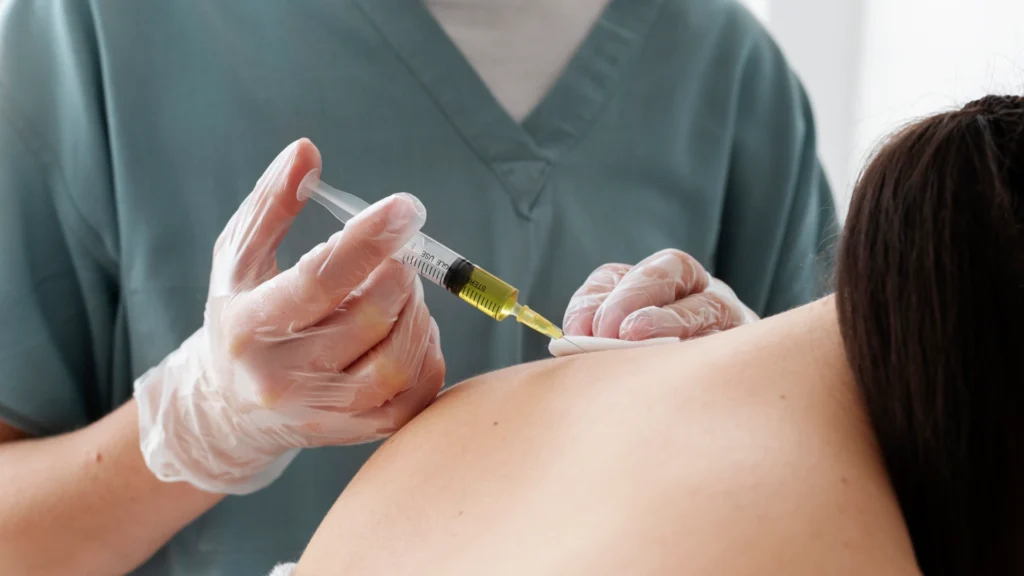
The word lipase refers to a group of enzymes that break down fats. During enzyme lipolysis, three different lipases work together, and each one performs a unique task. Instead of breaking down fat all at once, they remove one fatty acid at a time, making the process safe, controlled, and highly efficient.
| Lipolysis Enzyme | Main Function | Converts |
| Adipose Triglyceride Lipase (ATGL) | Starts fat breakdown | Triglyceride → Diglyceride + Free Fatty Acid |
| Hormone-Sensitive Lipase (HSL) | Continues fat breakdown | Diglyceride → Monoglyceride + Free Fatty Acid |
| Monoacylglycerol Lipase (MGL) | Completes fat breakdown | Monoglyceride → Glycerol + Free Fatty Acid |
Each enzyme depends on the work completed by the previous one. This coordinated sequence ensures that stored fat is released only when the body needs energy, helping maintain a healthy balance between fat storage and fat utilization.
How Enzymatic Lipolysis Works?
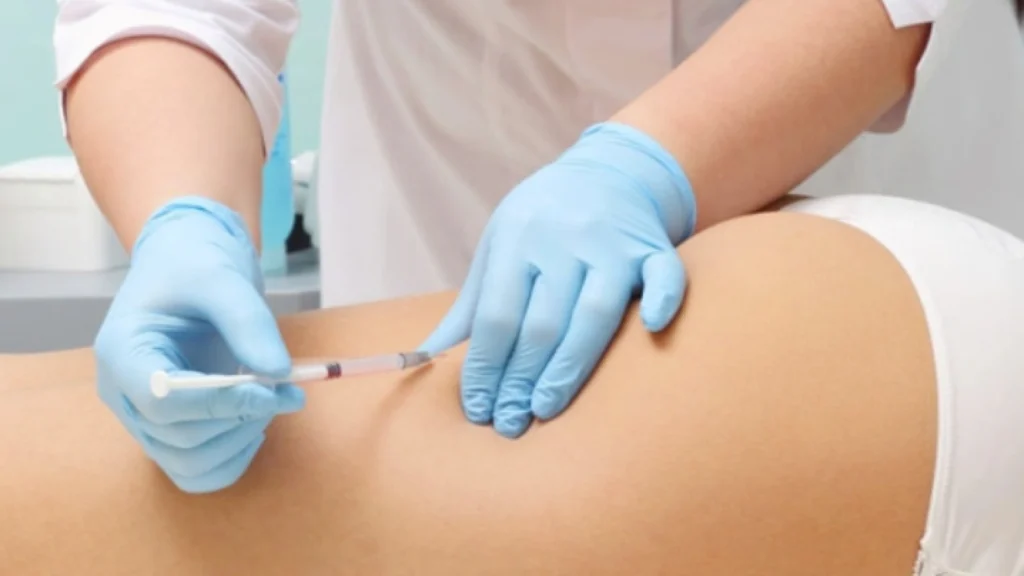
Enzymatic lipolysis is a controlled lipolysis process that breaks down stored fat into usable energy inside fat cells. Rather than occurring all at once, it follows a coordinated sequence directed by enzymes and hormones.
When the body requires more energy, hormonal signals activate lipolysis enzymes within fat cells. These enzymes then move to the lipid droplets, where triglycerides are stored, and begin the fat breakdown process.
The process follows a step-by-step sequence:
→ Triglycerides become accessible inside lipid droplets
→ Lipolysis enzymes attach to specific triglyceride molecules
→ Fatty acids are released one at a time through enzymatic hydrolysis
The body carefully regulates this process to ensure stored fat is broken down only when additional energy is required. This precise control makes enzymatic lipolysis one of the body’s most important metabolic processes.
Step-by-Step Enzymatic Lipolysis Process
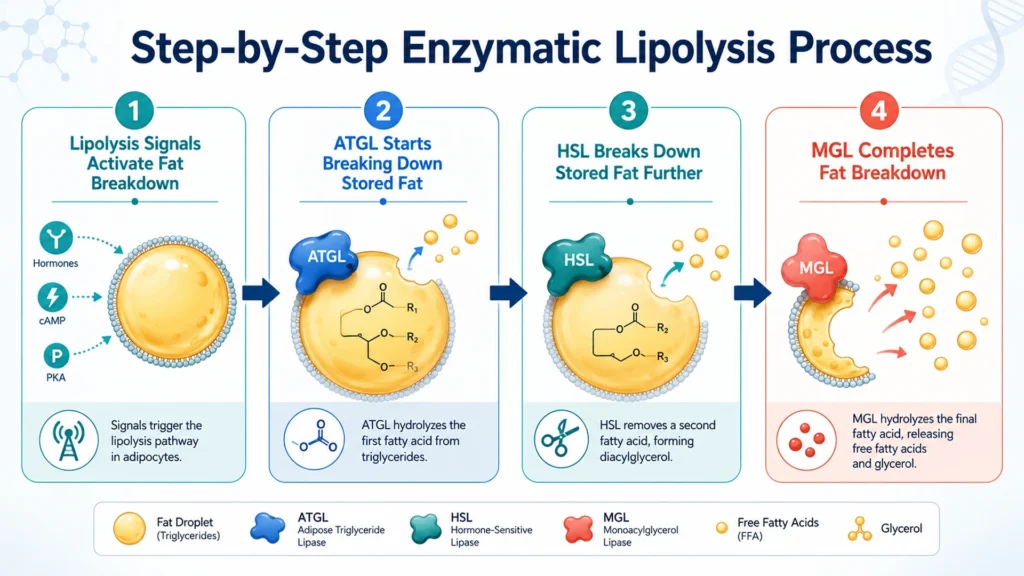
Enzymatic lipolysis follows a precise biological sequence in which stored fat is broken down step by step by specific enzymes. Each stage builds on the previous one, ensuring fatty acids and glycerol are released in a controlled and efficient manner when the body needs fuel.
Step 1: Lipolysis Signals Activate Fat Breakdown
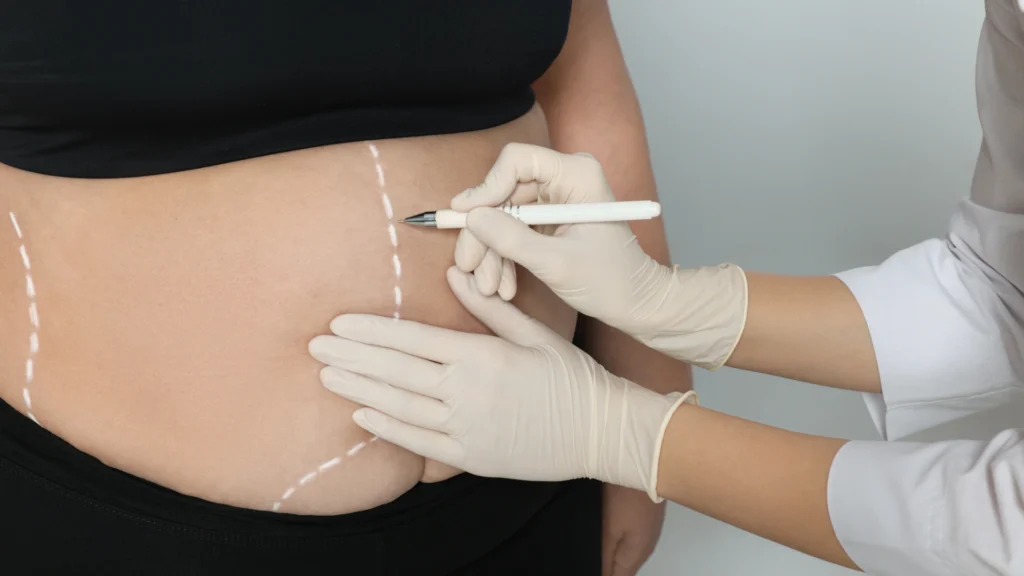
The process begins when your body needs more energy. This can happen during:
- Exercise
- Fasting
- Low blood sugar
- Stress
When this happens, your body sends signals to your fat cells. These signals tell lipolysis enzymes to begin working. The fat cells get ready to release stored fat, and the breakdown process starts.
Step 2: ATGL Starts Breaking Down Stored Fat
ATGL is the first enzyme involved in lipolysis. It starts breaking down stored fat by removing the first fatty acid. This begins the body’s natural fat breakdown process.
This first step makes stored fat available for the rest of the process. Without ATGL, efficient lipolysis cannot begin, preventing the body from properly accessing stored fat for energy.
Step 3: HSL Breaks Down Stored Fat Further
After ATGL finishes its job, HSL takes over. It removes another fatty acid and continues breaking down the stored fat. This keeps the process moving in the right order.
This step prepares the remaining stored fat for the final stage. It also helps the body release energy in a steady and controlled way.
Step 4: MGL Completes Fat Breakdown
MGL is the final enzyme in the lipolysis process. It removes the last fatty acid and completes the breakdown of stored fat.
At this point, one triglyceride has been converted into three free fatty acids and one glycerol molecule. These products are transported through the body and used to support normal energy production.
Your body does not break down stored fat all at once. Instead, it carefully controls each step, releasing fat only when extra energy is needed.
What Are the Primary Lipolysis Enzymes?
The breakdown of stored fat depends on a small group of core enzymes that work together inside cells. These are known as the primary lipolysis enzymes involved in enzymatic lipolysis. Let’s understand how each enzyme works step by step.
Adipose Triglyceride Lipase (ATGL)

ATGL is the first enzyme that starts the fat breakdown process. It is responsible for the initial and most important step of lipolysis.
- It breaks triglycerides into diglycerides
- It releases the first free fatty acid
- It acts as the rate-limiting step of fat breakdown
ATGL becomes active when the body needs energy, especially during fasting or exercise. It is tightly controlled by regulatory proteins that either activate or block its action, ensuring fat is only broken down when required.
Hormone-Sensitive Lipase (HSL)
HSL works after ATGL and continues the breakdown of stored fat. It is called “hormone-sensitive” because its activity is controlled by hormones. HSL hydrolyzes diglycerides into monoglycerides and releases the second free fatty acid during the process. This step is important for moving fat breakdown forward in a controlled way.
HSL is activated during conditions when the body needs extra energy, such as stress, exercise, and fasting. Hormones like adrenaline and glucagon send signals that turn on HSL activity.
These hormonal signals ensure that fat breakdown increases whenever the body requires more fuel for energy production.
Monoacylglycerol Lipase (MGL)

MGL hydrolyzes monoglycerides into glycerol and one free fatty acid, completing triglyceride breakdown. At this point, all stored triglycerides have been fully broken down into usable energy components.
The free fatty acids released during this process enter the bloodstream, where they bind to transport proteins and are delivered to different tissues. These fatty acids are then used as a major energy source, especially in muscles and other high-energy-demand organs.
At the same time, glycerol follows a different pathway. It travels to the liver, where it can be converted into glucose through metabolic processes. This helps maintain blood sugar levels, especially during fasting or long periods without food.
Together, these products help maintain the body’s energy supply during fasting and increased energy demand.
Lipoprotein Lipase (LPL)
Lipoprotein Lipase (LPL) is often mentioned alongside lipolysis enzymes, but it functions differently.
Unlike ATGL, HSL, and MGL, which act inside fat cells, LPL works on the surface of blood vessels. It breaks down triglycerides carried in lipoproteins (such as chylomicrons and VLDL) into fatty acids that can be absorbed by tissues.
Therefore, LPL is involved in intravascular lipid metabolism, while ATGL, HSL, and MGL control intracellular enzymatic lipolysis.
Understanding lipolysis enzymes helps explain how the body maintains energy balance and responds to different conditions like fasting, exercise, and energy demand. These enzymes are essential for proper fat metabolism and overall metabolic health.
Lipolysis Enzymes Diagram: How Fat Breakdown Happens
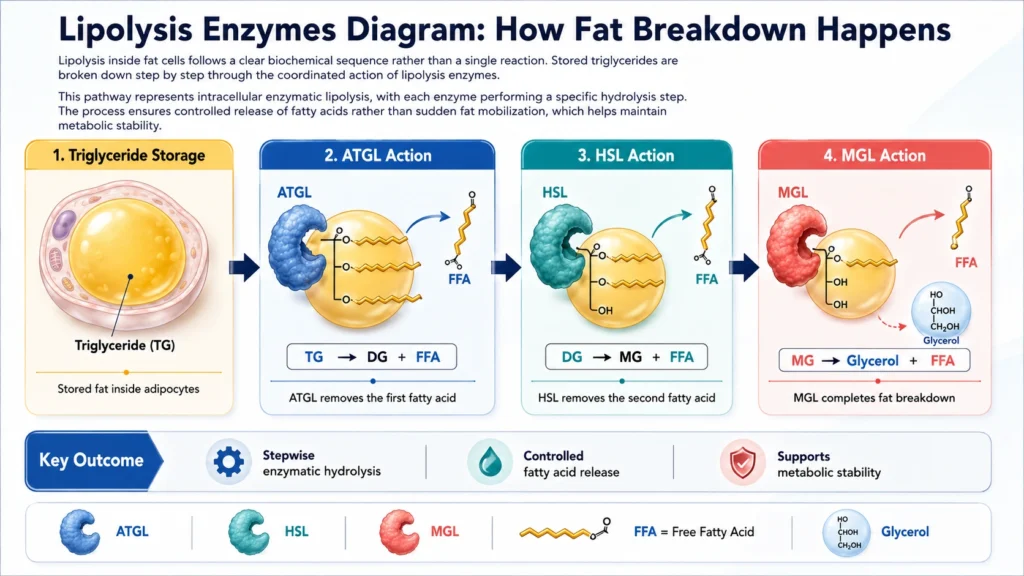
Lipolysis inside fat cells follows a clear biochemical sequence rather than a single reaction. Stored triglycerides are broken down step by step through the coordinated action of lipolysis enzymes.
This pathway represents intracellular enzymatic lipolysis, with each enzyme performing a specific hydrolysis step. The process ensures controlled release of fatty acids rather than sudden fat mobilization, which helps maintain metabolic stability.
How Hormones Control Lipolysis Enzymes
Lipolysis is influenced by hormones that tell the body when to release stored fat for energy and when to store it.
Lipolysis Activation
During exercise, fasting, or periods of increased energy demand, hormones such as adrenaline and norepinephrine signal fat cells to begin breaking down triglycerides. This activates lipolysis enzymes, allowing fatty acids and glycerol to be released and used as fuel by the body.
Lipolysis Inhibition
After eating, insulin helps slow down lipolysis and encourages the body to store energy. As insulin levels rise, lipolysis enzymes become less active, reducing the release of fatty acids from fat cells.
In simple terms, hormones help regulate when the body burns stored fat and when it prioritizes energy storage, maintaining a healthy balance between energy supply and demand.
Why Lipolysis Enzymes Matter in Fat Metabolism
Lipolysis enzymes are essential for converting stored energy into usable fuel. Without them, triglycerides would remain trapped inside adipocytes and unavailable for metabolic use.
Key roles of lipolysis enzymes:
- Fatty acids undergo beta-oxidation to generate ATP
- Glycerol supports liver glucose production during fasting state
- Prevents excess fatty acid accumulation in bloodstream circulation
- Enables switching between fat and carbohydrate energy sources
Without these enzymes, the body cannot break down stored triglycerides into fatty acids and glycerol, making it difficult to produce energy when needed.
Take the Next Step Toward Fat Loss With Lipolysis
Understanding which enzyme breaks down triglycerides into fatty acids during lipolysis helps you see how the body naturally converts stored fat into usable energy. It also explains why enzymes and hormones must work together to keep fat metabolism balanced and energy available when the body needs it most.
Although cosmetic lipolysis treatments share the same name, they do not activate the body’s natural lipolysis enzymes such as ATGL, HSL, and MGL. These procedures reduce fat by disrupting or destroying fat cells using injectable compounds or energy-based technologies, instead of stimulating the natural enzymatic lipolysis pathway.

At The Beauty Lounge Toronto, every treatment plan begins with a personalized assessment. Their experienced team takes the time to understand your concerns, explain your options, and recommend an approach that aligns with your aesthetic goals and desired results.
Ready to move forward with confidence? Book your consultation today to learn more about lipolysis, discuss your treatment options, and take the first step toward achieving your body contouring goals with expert guidance.
FAQs
Enzyme activity during triglyceride hydrolysis depends mainly on hormones, energy demand, and regulatory proteins. Hormones like adrenaline and glucagon activate lipolysis enzymes, while insulin slows them down. This balance ensures stored fat is broken down only when the body needs additional energy.
Fatty acid release is regulated through the coordinated action of ATGL, HSL, and MGL. Each enzyme removes one fatty acid in sequence, while hormonal signals control their activity. This stepwise process ensures fatty acids are released gradually and efficiently for energy production.
Lipolysis enzymes are essential because triglycerides cannot be used directly for energy. These enzymes break triglycerides into free fatty acids and glycerol, allowing the body to transport, process, and convert stored fat into usable fuel whenever additional energy is required.
During fat breakdown, lipolysis enzymes bind to triglyceride molecules and hydrolyze one fatty acid at a time. ATGL begins the process, HSL continues it, and MGL completes it. This controlled sequence converts stored fat into molecules the body can use for energy.
During enzyme lipolysis, triglycerides gradually lose their three fatty acid chains through hydrolysis. The molecule changes from triglyceride to diglyceride, then monoglyceride, and finally separates into three free fatty acids and one glycerol molecule that the body can readily use.